The Zutola of Zutola
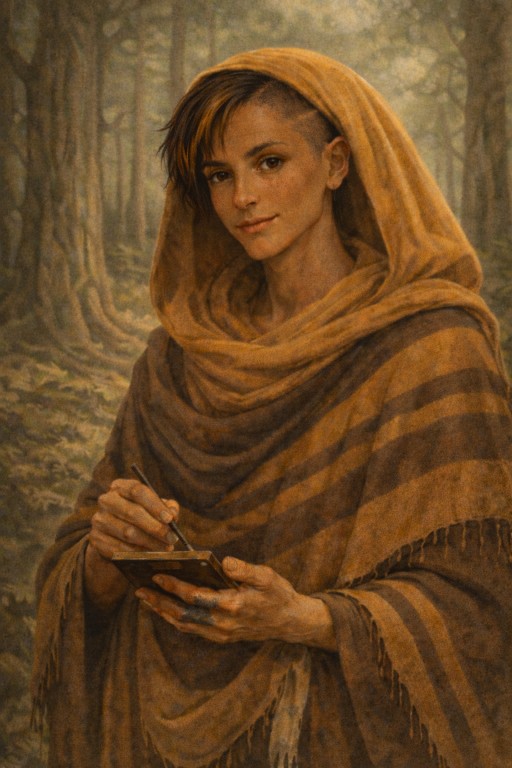
The Zutola are a people who believe that knowledge has no life of its own. To them, information preserved in isolation — in books, records, or archives — is inert and without purpose. Only when knowledge is held in a shared consciousness, continuously questioned, and reshaped within the collective mind does it acquire meaning and value.
Knowledge and Meaning
Among the Zutola, it is commonly said that there is no value in an answer by itself. Answers are never fixed and are always incomplete. The value of knowing something lies in how it reshapes meaning and purpose.
They hold that all answers are wrong — but some are useful, for a time.
New knowledge is not treated as something to be stored, collected, or protected. It is brought into conversation, examined from multiple perspectives, tested against existing understanding, and allowed to reshape it. This work is never finished. Knowledge is released again and again, free to change as circumstances demand.
Understanding is never considered complete. Correctness matters, but what matters more is whether shared meaning remains coherent.
The Collective Mind
The Zutola do not maintain written doctrine or permanent records. They may take temporary notes when transporting new information, but once it has been absorbed into the collective mind, such records lose their purpose and are discarded.
Their understanding of the world exists only as a shared, living structure, constantly revised through discussion, disagreement, and return.
There are no leaders, authorities, or final positions. Meaning emerges only through exchange.
Zutola are often compared to a hive without a queen. Individuals range outward, gather impressions and insights, and return. What they bring is not simply accepted, but broken down and absorbed into the collective understanding.
Every Zutola speaks for the whole — as an individual mind embedded within a collective consciousness.
Blur and Crossroads
At times, new information fails to fit within the current state of their understanding. When this happens, no coherent meaning can be held at all.
Such moments create dissonance. The new information may be flawed, earlier assumptions may be incorrect, or entire systems of understanding may require revision. When this dissonance cannot yet be resolved, the Zutola enter a state known as blur.
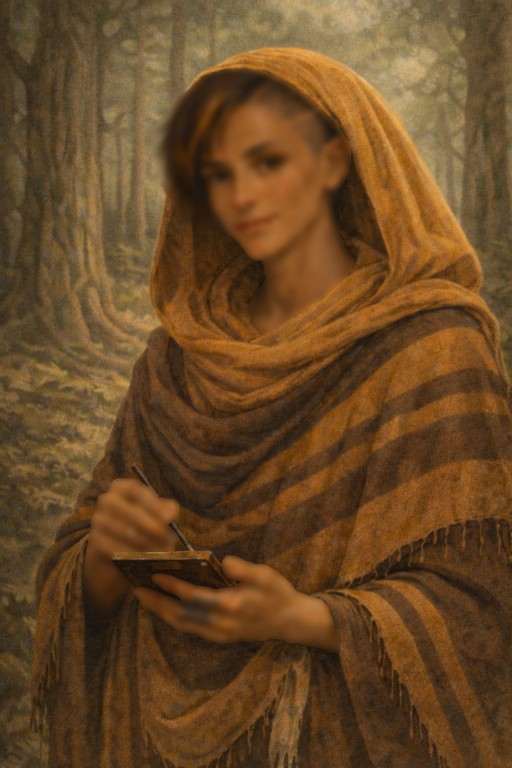
In blur, they appear slightly out of focus, as if withdrawn from immediate presence. This state may resolve quickly, or it may persist for long periods.
During such times, large parts — or even the entirety — of the clan may enter blur. Extended phases of withdrawal and reassessment follow, while foundational assumptions are dismantled and rebuilt.
One of the most significant of these moments came when the Zutola were forced to abandon the belief that the universe existed solely for Wendmor. The realization that Wendmor was not alone — and never had been — rendered their earlier worldview untenable.
The blur endured for generations. When clarity finally returned, the Zutola were no longer a settled, inward-looking people. They began to swarm across Wendmor in search of resonances, seeking new understanding shaped by a wider reality.
Afar and Afield
Since that turning, the Zutola have lived largely afield, seeking new knowledge as it emerges. Their travels were once infrequent and slow. Wendmor, as they knew it, changed graduall, and long they spent long times contemplating new information entering the shared mind at a trickle.
With the realization that a mirror world existed beyond Wendmor, this balance shifted. The Zutola sacrificed much of the time once devoted solely to contemplation in order to be afield more often. Now, they are seen all over Wendmor, especially at times of strong resonance activity.
Understanding, to them, grows through both travel and reflection. Neither is chosen over the other. Priorities shift as circumstances demand.
Ostresca
Ostresca is not arranged around homes or districts, but around movement. The settlement consists of many small, ascetic shelters made from bent branches and woven fibers, scattered loosely across open ground. These structures are not owned and are not considered dwellings. They exist only to provide temporary rest.
Any Zutola may occupy a shelter as needed. When it is no longer required, it is left for the next to use. No one returns expecting a particular place to be available.
Most of life in Ostresca unfolds between these shelters. The Zutola spend their days moving among small fires, shared meals, and shifting circles of conversation. Groups form and dissolve without notice. No gathering is fixed, and no place retains the same role for long.
Children remain close to their parents in early years, learning through proximity and repetition. Over time, they begin to drift further, spending longer periods among other Zutola. Integration into the collective comes gradually, through participation rather than instruction.
The old and the ill are cared for by those nearby. Assistance is given without assignment or ceremony. Only when an Zutola becomes immobile do they remain in a single shelter for extended periods. In such cases, the surrounding movement slows, and others adjust naturally to provide what is needed.
Nothing in Ostresca is fixed by design. Shelters shift, fires migrate, paths fade and reappear. The settlement changes subtly from day to day, shaped by presence rather than plan.
Reputation
The Zutola are generally well regarded across Wendmor. They are known for paying attention.
When they encounter others, they ask questions without expectation of correction or instruction. They do not probe in order to explain, persuade, or improve. They ask because they genuinely want to understand how others see the world.
This has earned them trust. Many find it easier to speak openly with Ostrescans than with scholars, officials, or storytellers, as no answer is treated as something that must be refined or resolved.
Few doubt their intent. The Zutola listen not to correct, but to understand — and to let understanding change in response.