The Averyx
Description
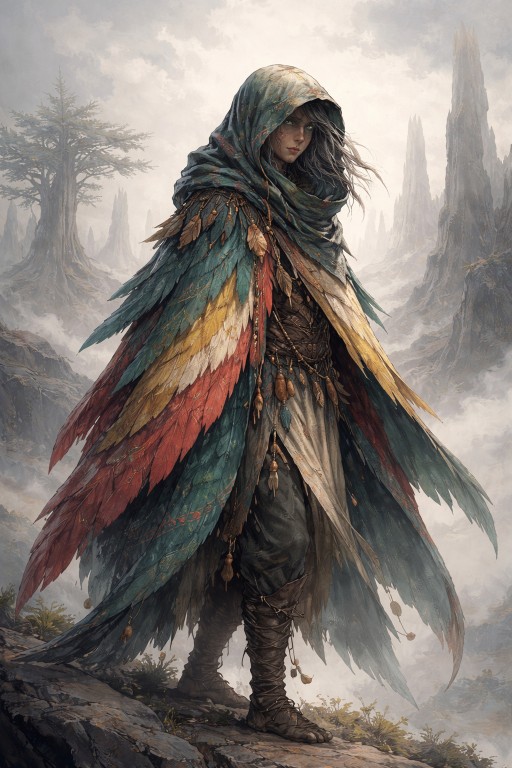
The Averyx are an air-adapted people who live apart from the grounded world, both physically and culturally. Their bodies are subtly less opaque than those of most peoples, their presence lightened as if the air has never fully settled around them. Skin tones tend toward ash, limestone grey, storm-pale blues, and smoke-lilac hues, with a soft matte quality rather than any glow.
They inhabit the Petrarchs, a vast petrified forest formed of colossal dead trees long turned to near-black stone. Rather than living on the ground among these fossilized giants, the Averyx build their homes high above it—on platforms, perches, and light structures anchored to the crowns and branches. The ground below is regarded as heavy, static, and dangerously binding.
Visually, the Averyx are defined by contrast. Their own forms are muted and restrained, but they clothe themselves in vivid, expressive garments—layered cloaks, banners, and fabrics of turquoise, coral red, sun-gold, indigo, and jade. Color is not decoration to the Averyx; it is proof of intent in a world stripped of growth and variation.
Social structure
Averyx society outwardly appears radically liberal. There are no formal hierarchies, no inherited roles, and no permanent leaders. Freedom of expression is spoken of as sacred, and individuality is publicly celebrated.
However, this freedom carries an unspoken bias.
Among the Averyx, extreme creativity is not merely encouraged—it is expected. To be unconventional is a virtue; to be ordinary is quietly suspect. Those whose expression is deemed too restrained, too familiar, or too “grounded” may find themselves subtly excluded from gatherings, overlooked in huddles, or spoken of with polite concern.
In this way, the Averyx embody a quiet irony: they reject rigid norms while enforcing a cultural expectation of difference.
Outsiders are distrusted not because they are foreign, but because they are presumed to carry normality with them—habits, assumptions, and expectations that could weigh Averyx life toward sameness and permanence. Visitors are rare, carefully observed, and seldom invited into private spaces.
Traditions and daily life
Life among the Averyx is shaped by scarcity and response.
The Petrarchs provide no fertile soil, no living wood, and little sustenance. To survive, the Averyx regularly send messengers and traders beyond the forest. These travelers glide outward to gather food, materials, dyes, tools, stories, and ideas from other regions of Wendmor.
When they return, the community gathers in communal huddles atop the platforms. Huddles are not councils or markets, but moments of collective release and transformation. Travelers share what they have brought back, and the Averyx respond instinctively—through storytelling, debate, crafting, performance, and redesign.
Creativity intensifies during these moments. New garments appear. Platforms are altered. Arguments are held passionately and then abandoned just as quickly. Nothing is finalized, and nothing is meant to be.
To fail to transform what is brought back is considered a form of stagnation—and stagnation is the deepest Averyx fear.
Flying and Cloaks
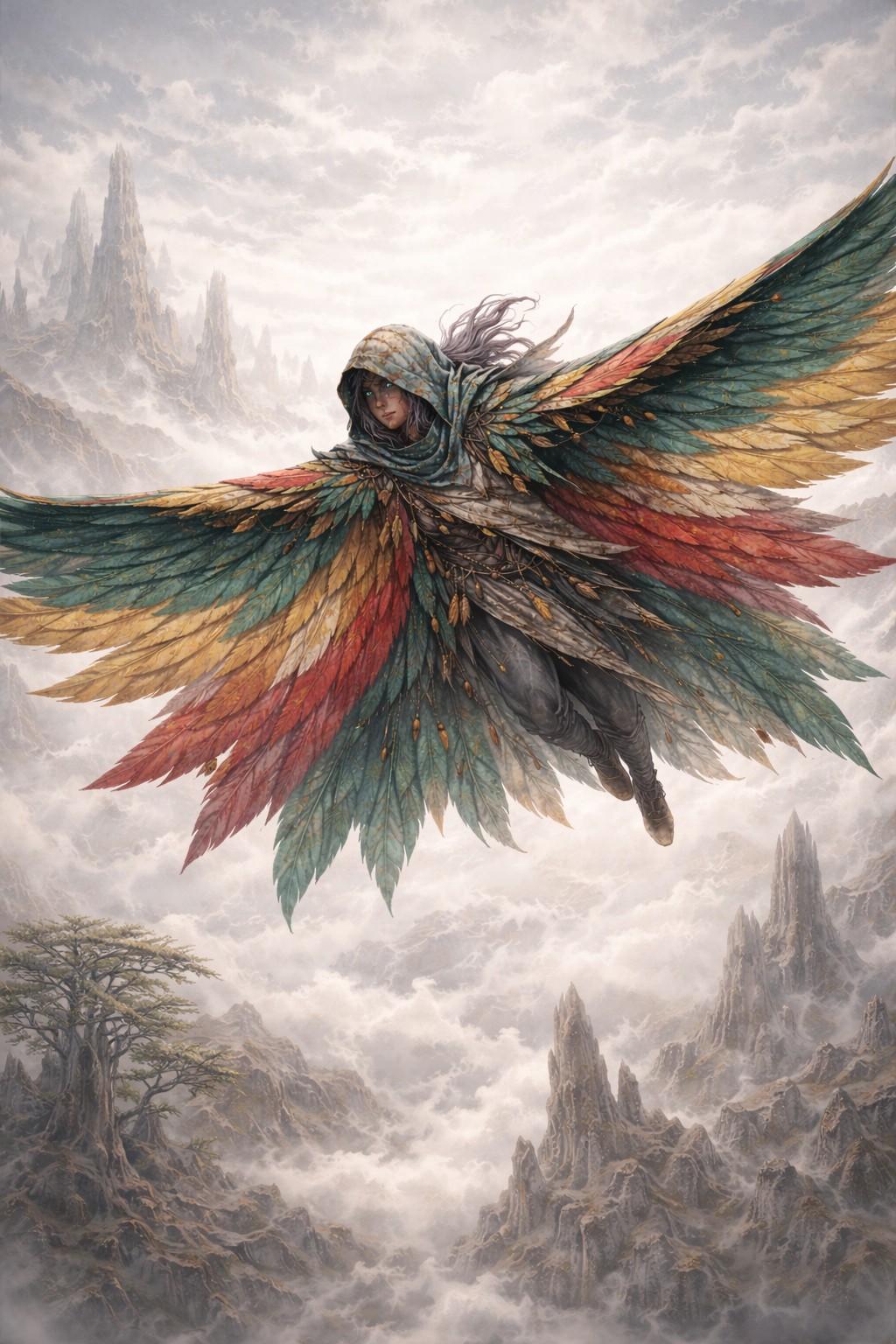
The Averyx do not possess wings. Instead, they craft their flight.
Every Averyx traveler wears a cloak—large, layered, and engineered. These flight cloaks unfold into wide, glider-like forms when leaping from height, their reinforced seams, stitched ribs, and tensioned panels catching the wind. When folded, they function as expressive garments; when spread, they become instruments of controlled drift.
Flight among the Averyx is calm and practiced. They do not flap or fight the air. They listen to it. Cloaks are endlessly modified and personalized, becoming intimate expressions of identity. To fly poorly is forgiven; to refuse flight altogether is quietly questioned.
Homes and Platforms
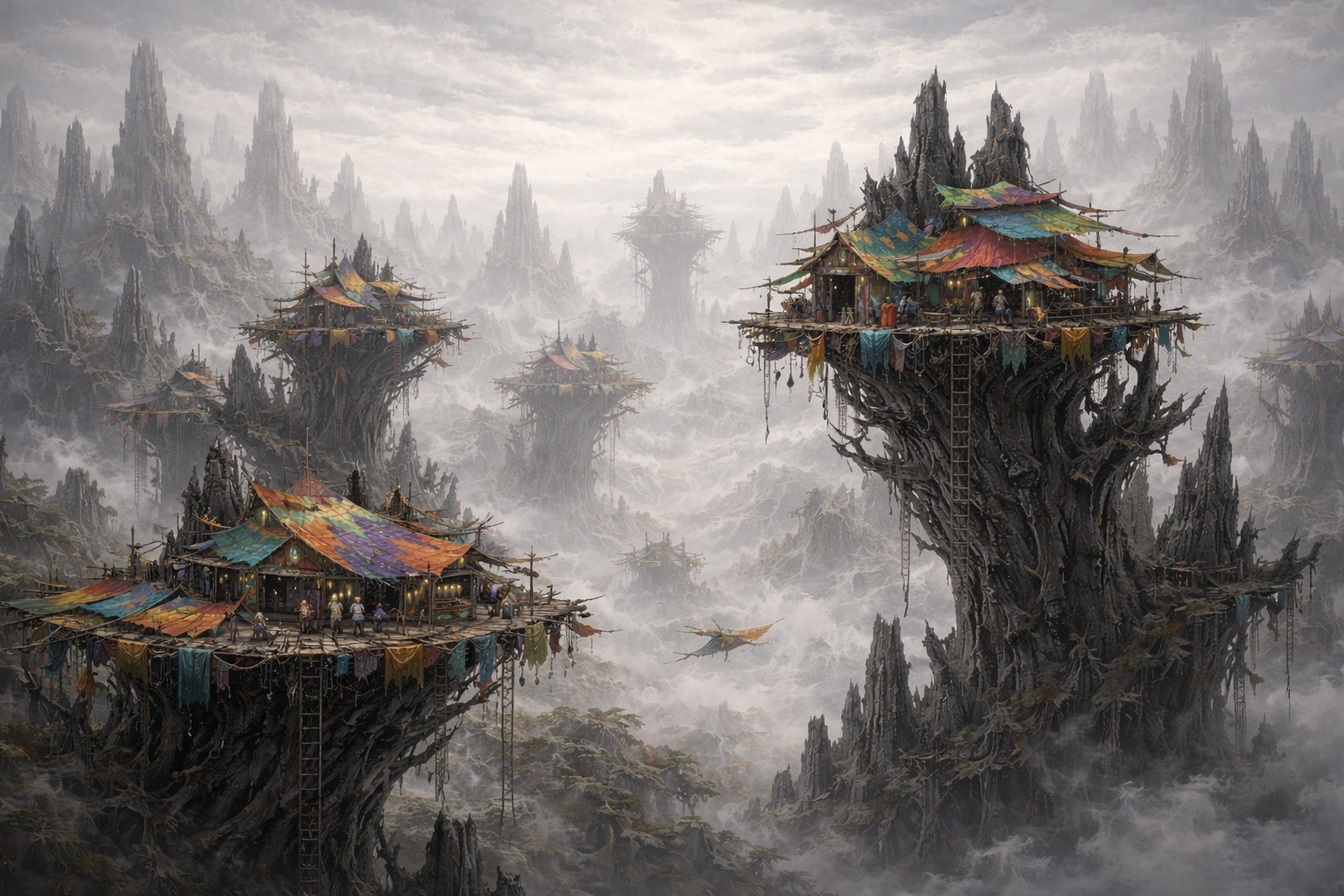
Averyx dwellings are built high above the petrified forest, anchored to the crowns and thick branches of the stone trees of the Petrarchs. These homes take the form of platforms, perches, and light shelters, each uniquely shaped and frequently altered. No two are alike, and none are intended to endure unchanged.
Constructed from salvaged wood, bone, cloth, resin, and thin frameworks, the structures appear deliberately lightweight against the near-black stone beneath them. Color enters the landscape only through Averyx hands: hanging fabrics, stitched canopies, banners, and flight cloaks left to catch the wind.
Access is carefully controlled. Rope ladders and cloth-wrapped lines are used when necessary, but are routinely pulled up once travelers return. Landing perches and open edges make clear that these homes are designed for arrival by gliding rather than by climbing.
Saying
“The ground asks us to stay the same. We answer by becoming more.”