The Tidelands
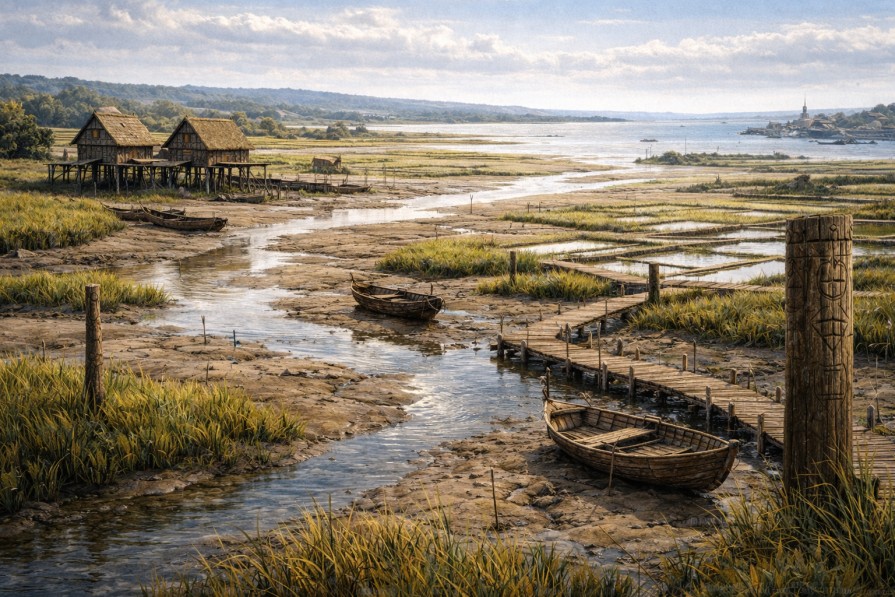
The Tidelands
Core Identity
The Tidelands are landscapes shaped by rhythm rather than permanence. They exist in a constant state of transition, regularly claimed and released by the sea.
This biome represents adaptation to change — a place where land, water, and time negotiate space every day.
Nothing here is fully stable, yet nothing is accidental.
Landscape & Physical Form
The terrain is flat, soft, and mutable.
- Mudflats, tidal marshes, and shallow inlets
- Channels and pools that appear and vanish with the tide
- Low islands, sandbanks, and reed beds reshaped constantly
- Wooden walkways, posts, and markers rising above the wet ground
The land feels temporary, its shape rewritten by water twice a day.
Vegetation & Life
Vegetation is adapted to salt, flooding, and exposure.
- Reeds, salt grasses, and tidal plants dominate
- Mangrove-like growth or root-tangled shrubs in sheltered zones
- Vegetation forms bands based on tidal reach
Life here thrives on cycles, not stability.
Fish, birds, and invertebrates follow predictable patterns tied to the tide rather than season alone.
Light, Color & Atmosphere
Light is reflective and shifting.
- Wide skies mirrored in shallow water
- Strong glare at low tide, softened at high tide
- Mist and low cloud common in early morning and evening
Color palette:
- Silvery blues and greys
- Muted greens and browns
- Wet reflections rather than solid tones
The air smells of salt and wet earth, carrying sound across open flats.
Human Relationship
Humans live alongside the Tidelands, not on top of them.
- Fishing villages and harbors sit on raised ground or stilts
- Wooden walkways, docks, and causeways connect land and water
- Knowledge of tides is essential and widely shared
The Tidelands reward timing and punish neglect.
Emotional Impression
The dominant emotional tone is watchful adaptability.
- Open
- Uncertain
- Rhythmic
- Calm but alert
The Tidelands feel peaceful — as long as their rhythms are respected.
Narrative & Quest Hooks
Common story themes include:
- Timing actions around the tide
- Navigating changing routes and hidden channels
- Recovering objects revealed only at low tide
- Choosing when to wait rather than act
Prompt
Style: Semi-realistic fantasy landscape illustration, grounded and naturalistic, with restrained fantasy elements and no overt magic.
A wide tidal coastal landscape in a fantasy world, viewed from a slightly elevated perspective at low tide.
Broad mudflats are broken up by winding tidal channels filled with shallow, reflective water. The landscape is alive with green and yellow salt-marsh reeds, growing in dense patches along the channels and across the flats, softening the terrain and adding color.
Narrow wooden walkways and plank paths stretch across the marsh, raised slightly above the mud and water to allow safe passage between structures as the tide changes.
Small wooden boats rest gently on the exposed mud or in shallow channels, designed to settle safely when the tide goes out.
Along the edges of the channels stand stilted wooden huts and storehouses, built from weathered timber, rope, and planks. The architecture is medieval and practical, shaped by sailors and fishers who live by the tide.
Wooden tide markers and navigation posts rise from the marsh, some carved with subtle, ancient symbols used for reading tidal cycles.
In the distance, the estuary opens toward the sea, with hints of deeper water, trade routes, and distant settlements.
Lighting is soft late-afternoon sunlight with brighter tones than a pure mudflat scene, balancing silvery water reflections, reed greens, sandy browns, and warm wood textures.
The atmosphere feels calm, patient, and inhabited — a place shaped by timing, knowledge, and long familiarity with the sea.
No glowing elements, no storms, no dramatic waves, no text.