The Sun-Scorched Flats
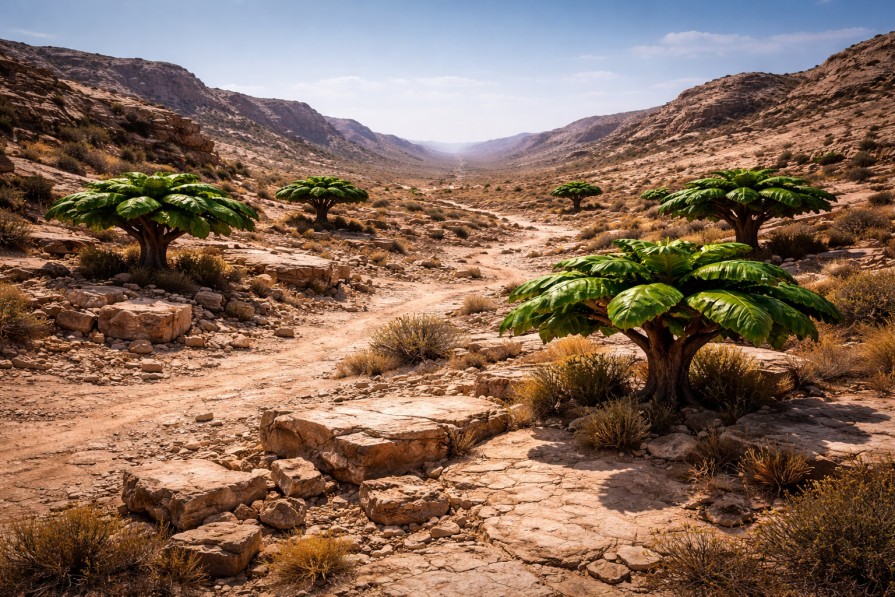
The Sun-Scorched Flats (replaces Sonora Desert)
Core Identity
The Sun-Scorched Flats are lands defined by thermal stress rather than aridity alone. They are not shaped by wind or moving sand, but by relentless sunlight breaking stone, drying soil, and exhausting anything that cannot adapt.
This biome represents endurance through specialization. Life here does not spread — it survives in place.
Landscape & Physical Form
The terrain is wide, flat, and sun-fractured.
- Exposed stone and cracked earth dominate
- Angular, blocky slabs of sun-split rock rest on the surface rather than being embedded
- Gentle undulations replace dunes or ridges
- Shallow, dry channels mark the brief passage of rare rain
The land feels rigid and exhausted, shaped by heat expansion and contraction rather than erosion or movement.
Vegetation & Life
Vegetation is sparse but highly distinctive and intentional.
- Life appears isolated rather than continuous
- Most plants emerge directly from rock cracks or shallow depressions
Kavari Shadebloom plants (Shadeblooms) define the biome:
- Thick central trunks
- Broad, wax-coated leaves
- Wide, umbrella-like canopies that cast deep circular shade
The Shadebloom’s shadow creates micro-habitats:
- Cooler soil
- Occasional clustered scrub growth
- Brief refuge for life
Nothing here grows accidentally.
Light, Color & Atmosphere
Light is harsh and uncompromising.
- Strong, direct sunlight under mostly clear skies
- Sharp shadows beneath rocks and Shadeblooms
- Subtle heat haze near the ground
Color palette:
- Pale ochres and dusty tans
- Stone greys
- Muted blue-green foliage with a waxy sheen
The environment appears bleached and reflective, emphasizing exposure over contrast.
Human Relationship
Humans do not settle the Sun-Scorched Flats casually.
- Travel follows Shadebloom spacing and dry channels
- Water sources are rare and planned for
- Routes are chosen for shade intervals rather than distance
Knowledge here is practical and ecological:
- when to move
- where to stop
- how long to endure
Mistakes are cumulative rather than sudden.
Emotional Impression
The dominant emotional tone is attritional resilience.
- Exposed
- Draining
- Stark
- Quietly impressive
The Sun-Scorched Flats feel survivable — but only with respect and preparation.
Narrative & Quest Hooks
Common story themes include:
- Navigating from shade to shade
- Endurance crossings under time or heat pressure
- Discovering abandoned routes or failed outposts
- Learning the rhythm of rare rain
The Kavari Shadebloom
A rare, heat-adapted broadleaf plant native to the Sun-Scorched Flats, known for its wide, wax-coated leaves that form an umbrella-like canopy and cast deep shade beneath. The plant survives by creating its own micro-climate, reducing evaporation and allowing life to persist beneath it in extreme heat. Grows singly and far apart, emerging from cracked stone or shallow depressions.
Sun-split stone
In-world understanding:
- Large rock slabs slowly crack under extreme heat
- Over time, they fracture into stacked, blocky segments
- Once split, they barely move — the land is too dry
Prompt
Style: Semi-realistic fantasy landscape illustration, grounded and naturalistic, with restrained fantasy elements and no overt magic.
A vast expanse of dry, sun-scorched land dominated by exposed stone, cracked earth, and scattered sun-split rock slabs fractured by long exposure to heat. The terrain is mostly flat with gentle undulations, broken by angular, blocky stone fragments and low stacks of split rock resting on the surface rather than embedded in it. Shallow dry channels cut through the flats where rare rainwater briefly flows before vanishing.
Vegetation is sparse but distinctive. Isolated Kavari Shadebloom plants (commonly called Shadeblooms) grow far apart across the stone flats, often emerging from cracks in rock or shallow depressions near sun-split stone. Each Shadebloom has a thick central trunk and a crown of large, broad, wax-coated leaves forming a wide, umbrella-like canopy that casts a deep circular patch of shade beneath it. Smaller scrub plants sometimes gather in the cooler shadow below.
The color palette is restrained and sun-bleached: pale ochres, dusty tans, stone greys, and muted blue-green foliage with a subtle waxy sheen. Light is harsh and direct beneath a mostly clear sky, producing strong shadows beneath rocks and Shadeblooms, with faint heat haze close to the ground.
The atmosphere feels dry, exposed, and resilient — a landscape shaped by relentless sun and thermal stress rather than wind or movement. There are no dunes, no lush growth, and no fantasy effects, only adapted life, fractured stone, and long endurance under heat.